
Wake Forest Resident Lookup Records
There is no single official roll of everyone in Wake Forest. The useful record depends on the question. An election result can confirm registration status, a parcel card can identify an assessed owner, and a docket can show a public case filing. Each has limits. Most of Wake Forest is served by Wake County, but a smaller incorporated area is in Franklin County. Start with the physical address and the town or county map before using a county office. A Wake Forest name alone is not enough to select the right deed, tax, court, or election custodian.
| Record | What It Confirms | Where | Access |
|---|---|---|---|
| Property card | Assessed owner, parcel keys, and situs or mailing fields | Wake property search | Online for Wake parcels; owner is not occupant proof |
| Voter lookup | Registration status and election jurisdictions when available | N.C. voter lookup | Name-first search, subject to protected-address rules |
| Court docket | Public case number, parties, events, and disposition when entered | North Carolina eCourts | Online index plus clerk file and certified-copy route |
| Vital event | A defined birth, death, marriage, or divorce event | N.C. Vital Records | Year routing and eligibility control access |
| Public affiliation | Entity or professional credential status | NC BOLD or the state business search | Public filing or credential, not a home-residence claim |
Use the narrowest record that can answer the question. A parcel search works when the question is ownership. A former classmate may be easier to place through a yearbook and a dated directory. Court and vital records require more care because a matching name, a charge, or an event does not establish the person’s current address.
Choose the Wake Forest County Route
Wake Forest’s municipal boundary crosses counties. For a Wake County parcel, the Wake iMAPS viewer and property card can help establish the parcel, REID or PIN, and jurisdiction. If the physical location belongs to the Franklin County portion, route county records to Franklin rather than assuming the Wake County portal is complete. Statewide systems, including voter lookup, eCourts, and vital-record ordering, still require the right county context to separate people with similar names.
The Town maintains municipal minutes, permits, planning material, maps, and cemetery information, but it does not replace the county Register of Deeds, assessor, Clerk of Superior Court, or elections board. Keep the source, search date, record number, and any displayed limitation with each result. That simple record trail makes a later correction possible.
Note: A Wake Forest postal city does not decide the county custodian, so confirm the address before relying on a county-level result.
Frame a Wake Forest Resident Lookup
The State Board of Elections form asks for first name, last name, an optional middle initial and year of birth, county, and at least one status choice. Select Wake or Franklin when known, and use the Registered and Removed or Denied status options deliberately. A live result may show registration details, jurisdictions, polling place, sample ballot when available, absentee information, and voter history. It is a status tool, not an address-to-name directory.
The Wake County voter-information instructions describe choosing WAKE, searching, and opening the matching name. Compare the displayed jurisdiction and address carefully. A removed or denied entry is not evidence of current registration, and protected voter addresses must remain protected. For broader historical or civic data, the state’s registration and participation files have different field sets and update cycles.
The state registration-data page explains the current and historical data files and the protected identifiers that are excluded. Voter history records participation, not ballot choices. Those limits are part of the result, not a gap to fill by inference.
A Wake voter-information screen is shown below. Use its county and name controls to reduce same-name matches before checking another official record.
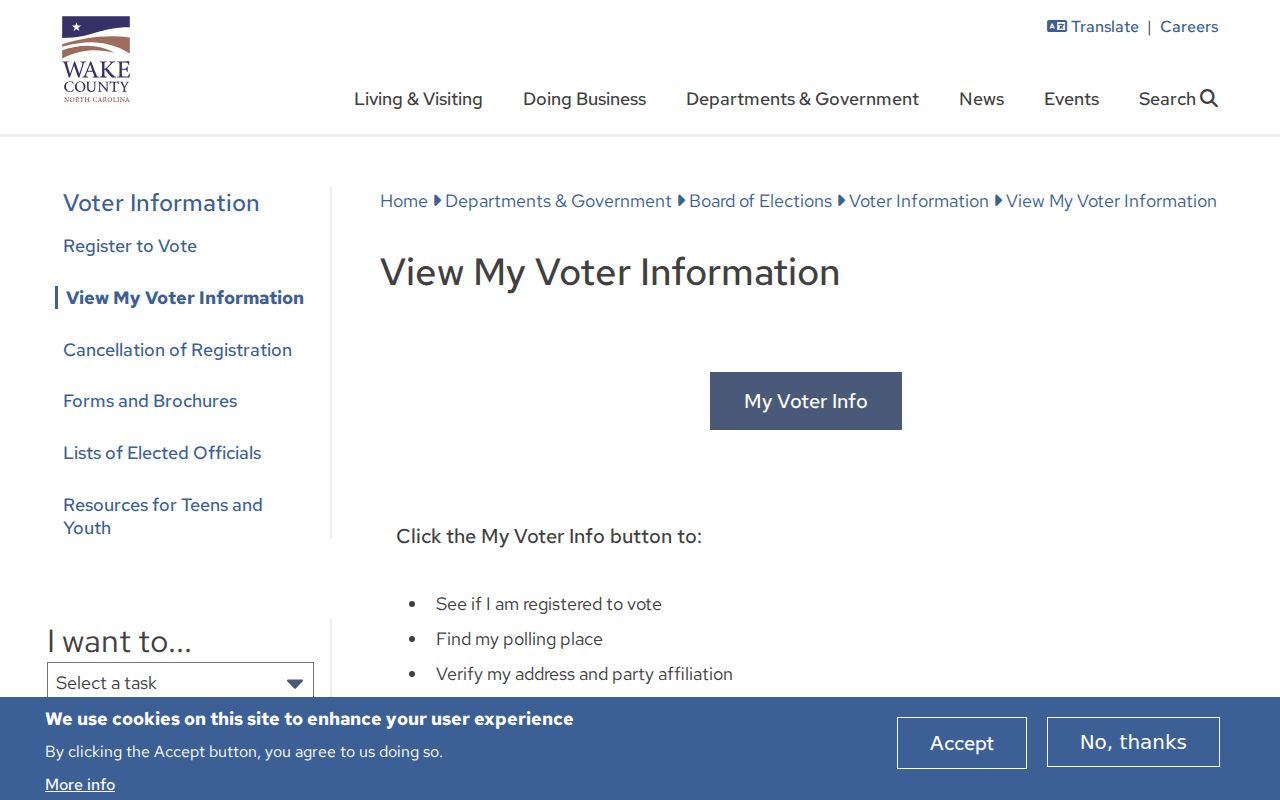
The county instructions are useful for the current voter route, while the statewide form remains the place to compare Wake and Franklin county choices.
Verify a Wake Forest Resident Lookup
A match becomes more credible when two independent custodians support the same identity detail. Start with a name and address lead, then preserve each source’s own terms. A tax-card owner can receive mail elsewhere. A voter record describes registration. A directory reflects its edition date. The goal is to confirm a specific fact, not to combine fragments into a profile.
- Confirm which county holds the address, then use the voter lookup or property search that matches the question.
- Record the name form, county, status or parcel key, and source date. Try a middle initial, former name, or spelling variant only when the record supports it.
- Run eCourts with the most complete name form and narrow to Wake County where appropriate. Read events and dispositions, not just a case label.
- For a family-history event, use the state’s event-year route and document relationship or eligibility before ordering a certified copy.
- Keep contradictory results visible. Different names at one address may describe an owner, listed occupant, relative, or an older record.
- Docket
- A court’s running list of filings, hearings, events, and dispositions for a case.
- Index and image
- An index helps locate a record; the linked image or file is the underlying document when public access is available.
- Certified copy
- A copy issued by the custodian with certification for a use that requires an official copy.
- Situs address
- The physical property location, which can differ from the mailing address on a parcel card.
For an address-focused trail, use the Wake Forest streets resource after identifying the correct parcel. It handles the current address chain without turning an owner result into an occupancy claim.
Search Wake Forest Names in eCourts
For Wake County matters, the Wake County Judicial Branch page is the local clerk and courthouse route, and eCourts is the statewide public portal. North Carolina announced that all 100 counties were on the Enterprise Justice/Odyssey system by October 13, 2025, making the Portal a useful modern starting point for a Wake Forest name search. Smart Search accepts the recommended format Last, First Middle Suffix or a record number. Advanced Search can add county or location, case type, status, and date context. A surname wildcard needs at least three characters; a first-name wildcard needs at least one. A record-number wildcard needs at least four characters before the wildcard.
| eCourts field | How it helps a resident lookup |
|---|---|
| Smart Search | Use the full name form or a case number. |
| Party Name | Use spelling variants within the portal’s wildcard rules. |
| County/location | Narrow a common name to Wake County when that is the proper county. |
| Case type, status, and date | Add context rather than assuming each same-name result is the same person. |
| Hearings search | Find scheduled court events by name, attorney, or case number. |
A public eCourts result does not display every file. Sealed or confidential documents, juvenile material, and protected participant information can be unavailable. For paper files, a public terminal, copy, or certification, contact the clerk. A court index is a route to the record, not final identity proof.
Wake County court and Clerk information below supports the local fallback when the Portal does not answer a document question.
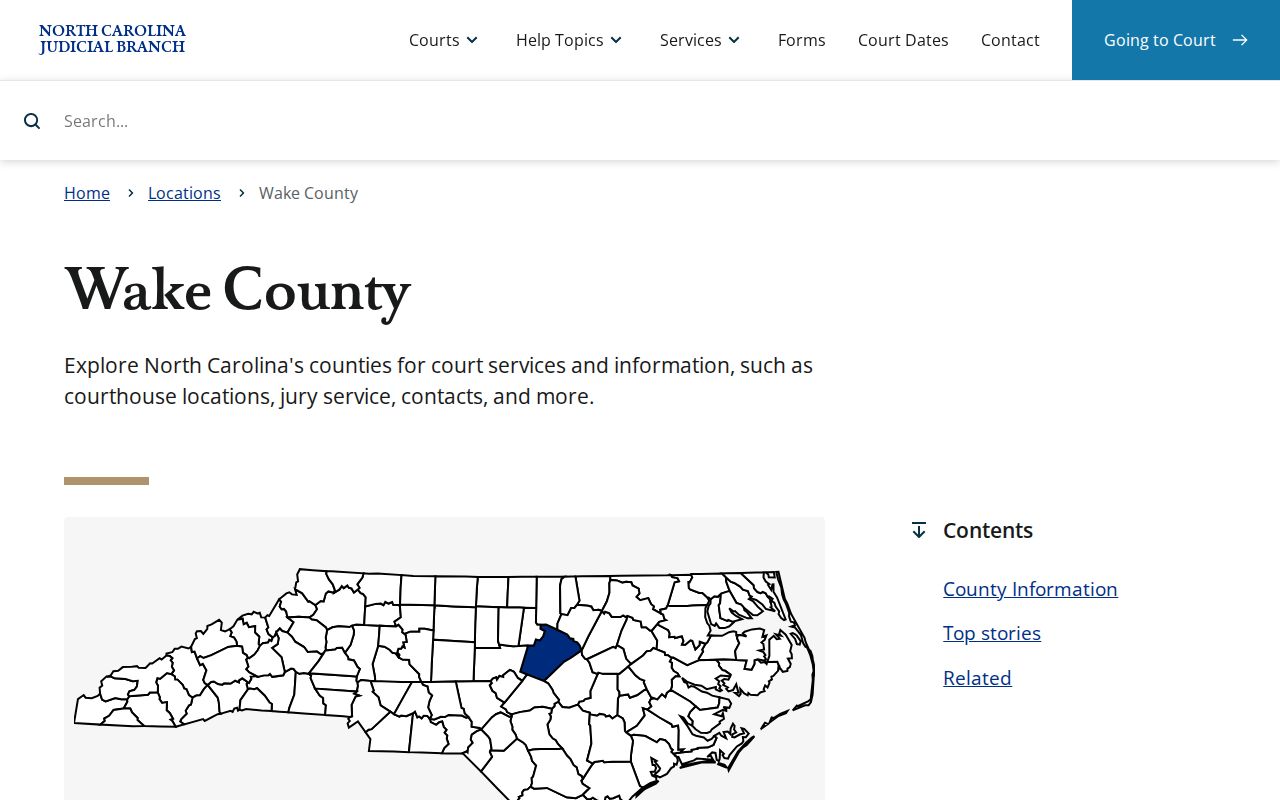
Clerk-held files and public terminals are especially important when a portal result needs a certified copy or has a document-access limit.
Read Wake Forest Court Result Fields
For a public result, record only the fields the Portal actually displays and distinguish a case event from its outcome. The results and docket areas can include case summary, case information, party information, causes of action, events, hearings, dispositions, and financial information where applicable. A booking entry is not a court disposition, and a charge alone is not proof of guilt.
- Case number, county or location, case type, and status
- Filing or open date and court assignment
- Party name, role, and attorney when displayed
- Event chronology and scheduled hearing details
- Disposition or judgment when entered
- Public document or image controls, plus visible redactions or omissions
Judicial Branch records-access guidance explains that clerk offices have public terminals and provide copies or certified copies under their procedures. Give the clerk the county, full name, case type, approximate date, and exact document sought. That is more useful than a broad request for a person’s records.
Note: A documented disposition and matching identifiers are needed before a court result can be treated as a reliable identity lead.
The Judicial Branch court-records access guidance is pictured below. Its Portal route and clerk terminals help narrow a search without constructing a person list.
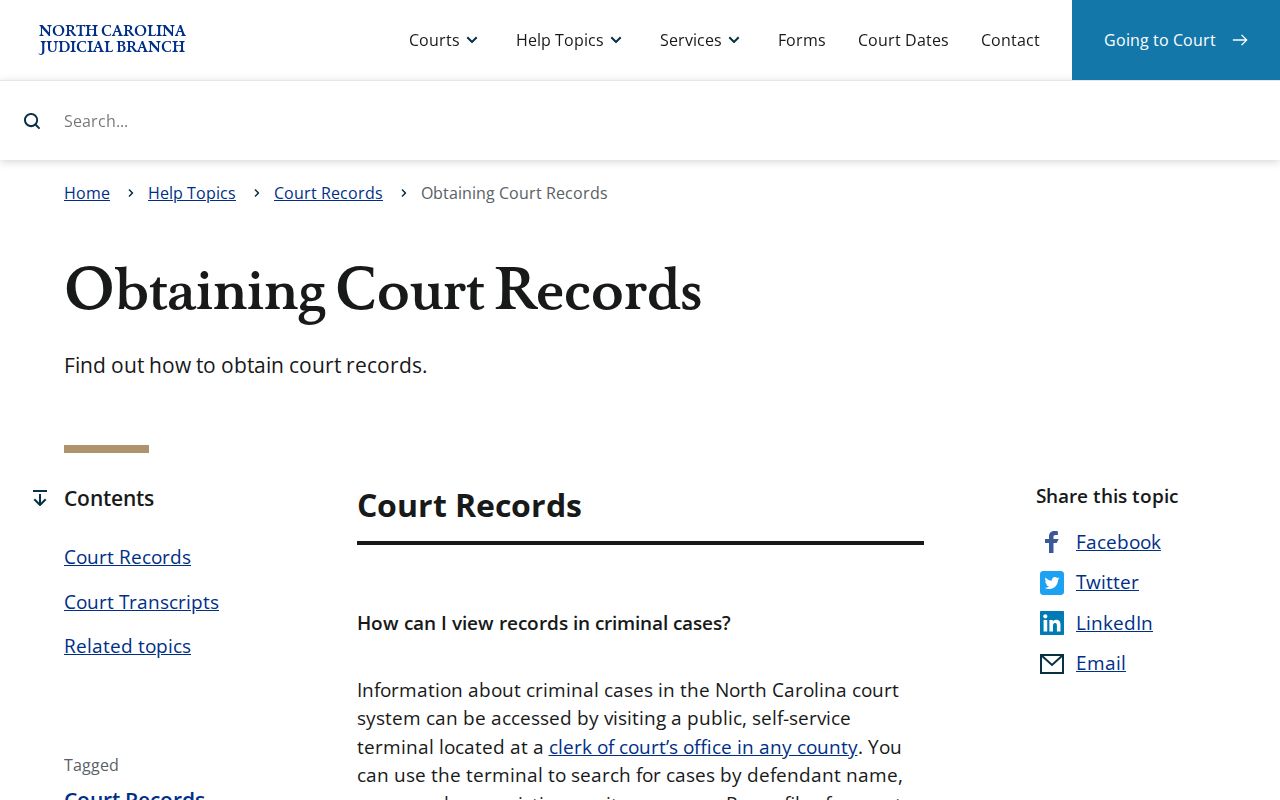
Use the displayed case number and county to make any clerk request specific and reproducible.
Route Wake Forest Vital Record Years
North Carolina Vital Records is an order and research service, not an unrestricted name-search database. The state holds births from 1913, deaths from 1930, marriages from 1962, and divorces from 1958. Earlier births and marriages generally route to the county Register of Deeds, earlier deaths to the State Archives, and earlier divorces to the Clerk of Superior Court. The event county matters, so Wake Forest’s two-county footprint cannot be skipped.
The state lists a $24 search per three-year period whether or not a record is found. Certified copies are restricted by N.C.G.S. 130A-93; the requester must supply the needed event information, relationship or entitlement, identification, and payment. Wake County’s local vital-record portal is a separate route for eligible Wake County-issued birth, death, and marriage certificates.
The state research page below supplies the holding-date and earlier-record routing details. Ask the custodian about the exact year and access type before paying for a search.
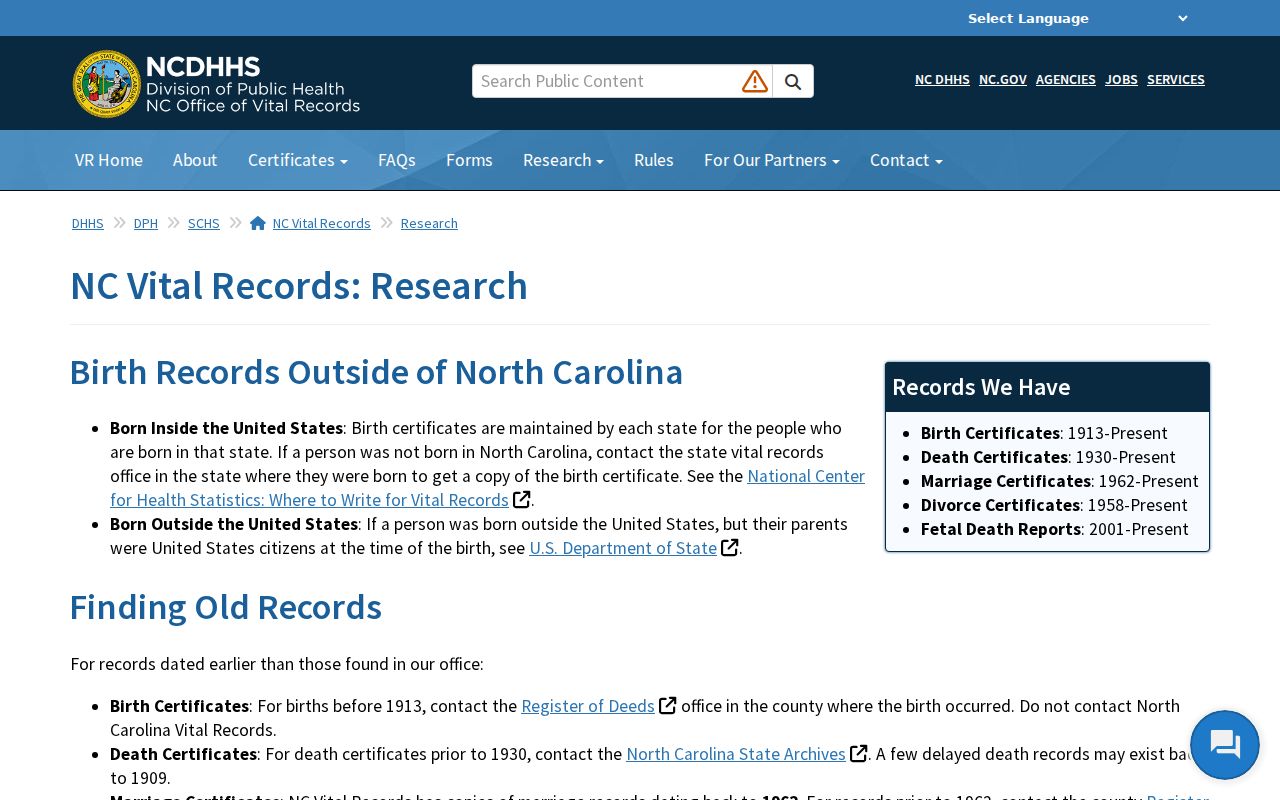
Event records can confirm a defined event, but they do not establish where a person lives now.
Check Wake Forest Public Affiliations
When the question is whether a public business or credential connection is genuine, check the official filing or licensing system rather than treating it as a residence source. The North Carolina business search can show an entity’s legal name, status, registered agent, filings, and public addresses. NC BOLD directs searchers to the relevant licensing agency, while NCTracks supports practitioner searching by NPI, license number, or name.
An entity address or registered agent may connect several organizations and is not necessarily the person’s physical address. The same rule applies to a professional listing. These records work well as a verification clue when paired with a date, a filing, or an official credential, but not as a substitute for a county property or voter record.
The Wake County vital ordering portal is shown below as an example of a custodian-specific request surface. Read its eligibility and delivery information before submitting personal identification.
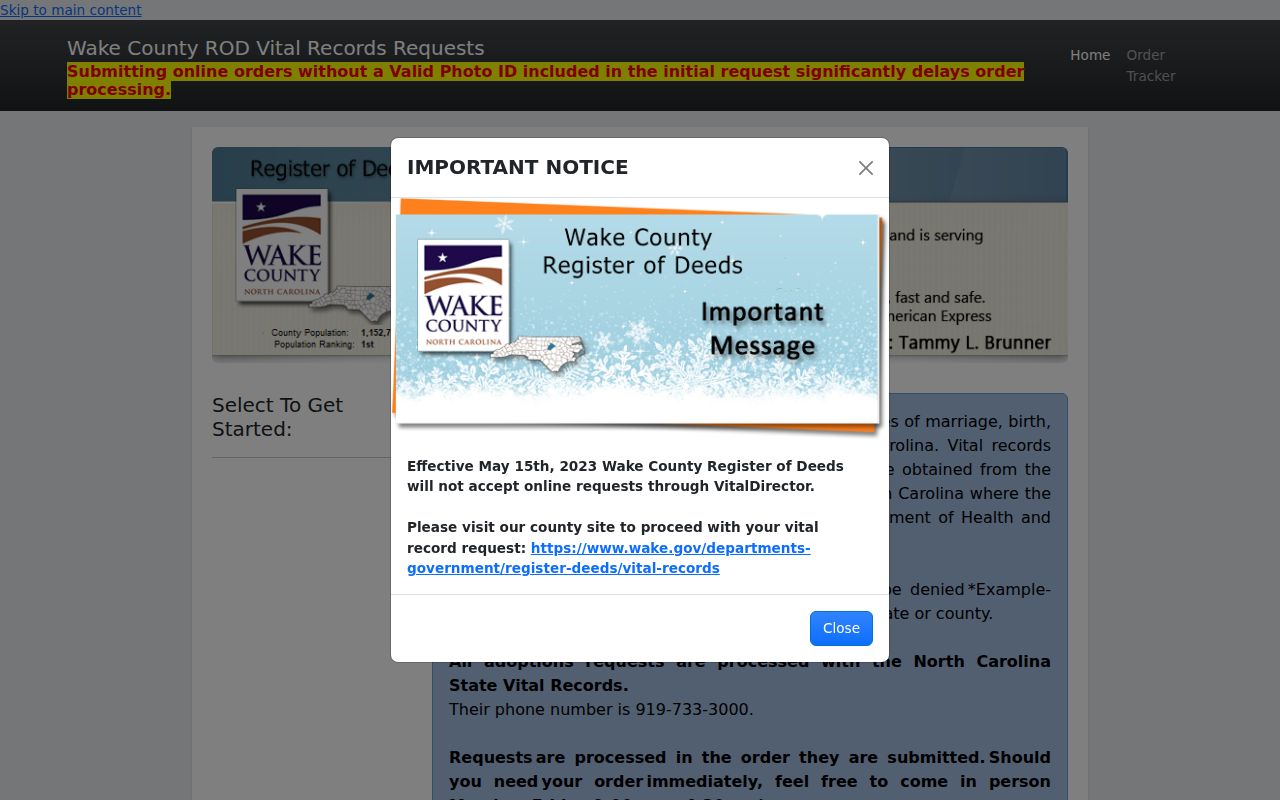
Official portals identify their own record class and requirements, which is safer than assuming a name match opens every related record.
Resolve a Wake Forest Lookup Mismatch
When an online result fails, use the record’s documented fallback. Try name order, a middle initial, a former or married name, spelling variants, a firm name, or a date range. Then ask the custodian to search an existing index at the counter, request a narrow copy under the North Carolina Public Records Law, call the responsible office, or use Olivia Raney Local History and the State Archives for older material.
The Wake County Register of Deeds, Clerk of Superior Court, tax staff, elections office, libraries, and archives each hold different layers. The county has a records-request portal for county material not found online. Identify the department, record category, date range, document or case number, and preferred format. Ask for an existing record or inspection first, not a custom investigation.
Note: Keep the source office, terms searched, date, record identifier, and stated limitation with every result you rely on.
Limits on Wake Forest Resident Lookup
North Carolina public-record access has clear exceptions. The Town identifies sensitive security, personnel, tax, and Social Security information as protected. Chapter 132 supports redaction of identifiers such as Social Security numbers, driver-license numbers, bank data, and passwords. Court records may be sealed or confidential. Vital records have separate eligibility rules, and voter files exclude key identifiers. A source that omits a field is not an invitation to infer it.
The North Carolina Address Confidentiality Program provides a substitute-address route for qualifying survivors who have moved or are moving for safety. Voter-address protection can also apply when the required authorization and safety statement are presented. Do not publish, trace, or attempt to reconstruct a protected address.
Lawful use. Use Wake Forest resident lookup records for lawful personal, family-history, civic, or property research. Never use them to stalk, harass, intimidate, or harm another person.
The state voter-data page below illustrates that public election data carries its own field limits and privacy controls.
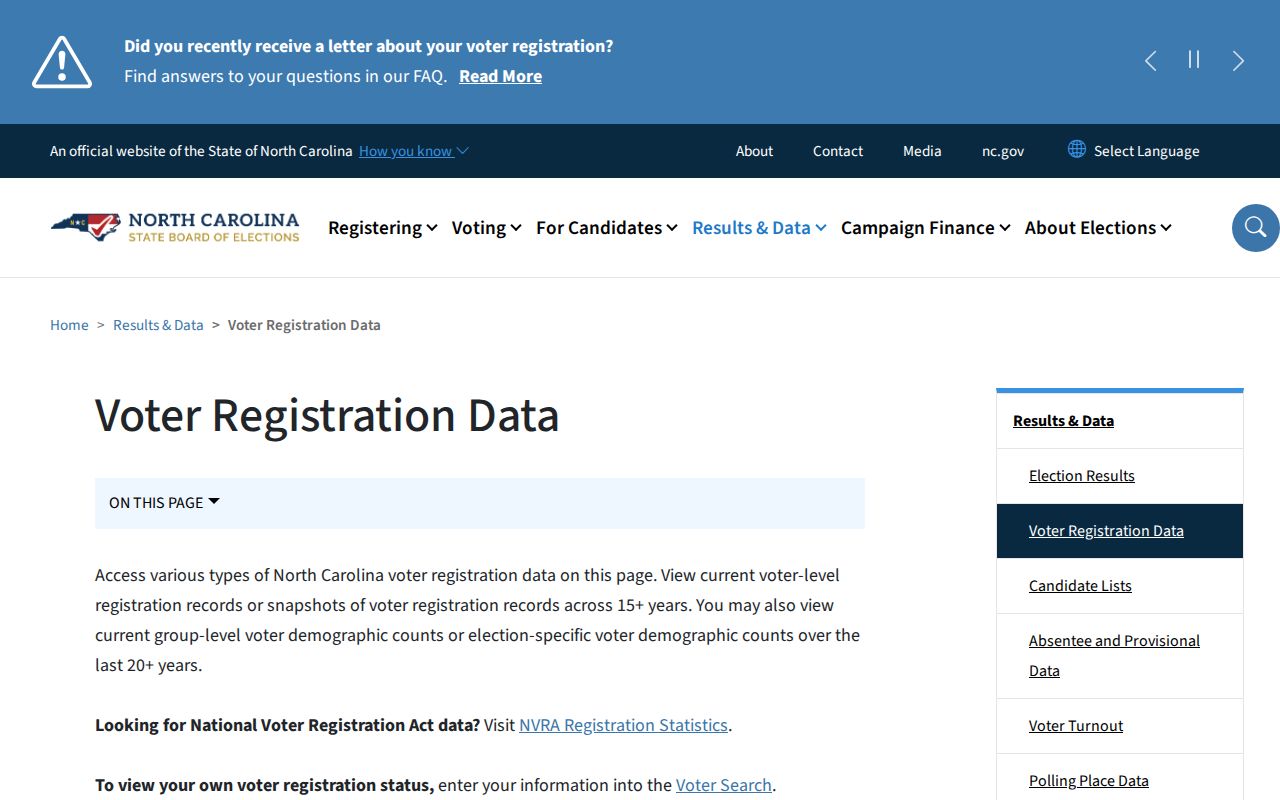
Respecting protected fields is part of a sound verification process and preserves the distinction between public access and unrestricted reuse.