
Wake Forest Previous Residents Sources
To answer who lived here before, keep ownership and occupancy separate. A deed chain follows land transfers. A directory may name an occupant, a phone listing, or a business. A newspaper or yearbook can add a dated family or campus connection. Wake Forest’s history also has changing place names and boundaries, so the same address may appear under a mill village, college, township, or later town reference. Use the parcel’s county and legal description as the durable thread.
| Source | Years It Covers | Where Held | What It Shows |
|---|---|---|---|
| Wake recorded-document index | July 1785 to April 17, 2025 in the legacy notice | Wake Register of Deeds | Grantors, grantees, book and page, document type, and linked documents where available |
| Wake deed and reconveyance microfilm | Cataloged runs include 1785–1946 deeds and 1884–1939 reconveyances | Olivia Raney Local History | Older title clues when an online search is thin |
| Raleigh Suburban Directory | 1975 onward | Olivia Raney catalog | Published Wake Forest household, street, telephone, or business listings |
| Raleigh directory and cross-reference holdings | Selected 1880–1938 editions and later holdings | Olivia Raney catalog | Earlier regional address and name leads, not a Wake Forest-only run |
| Wake Forest College yearbooks | Selected 1912–1976 volumes | Olivia Raney Local History | Campus-era people and affiliation clues, not automatic residence proof |
Start with the property card and deeds for the owner trail. Then use the directory shelf to test whether a person was listed at the address during a particular edition. The library does not document a single public online reverse directory for all Wake Forest addresses, so staff-assisted cross-reference volumes and microfilm remain part of the route.
Note: The Wake County sources belong to Wake County parcels; confirm a Wake Forest address in Franklin County before using this local chain.
Anchor a Wake Forest Past Address
Before tracing past residents, locate the physical parcel. The Wake County Real Estate Property Search supports owner, Real Estate ID, location-address, and PIN searches. Its location mode uses street number and street name, with the instruction not to include the street type in the street-name field. The returned parcel details can supply a REID or PIN, situs address, mailing address, deed book and page, year built, and planning jurisdiction.
Those are keys, not a complete household history. A mailing address may belong to an owner who lives elsewhere, and an owner can be a business entity. The property card’s deed book and page are leads to the Register of Deeds image. The legal description and parcel identifier are better checks than a street label when lots were subdivided, a road was renamed, or an old record uses a township reference.
The Town history below gives the local context behind older descriptions. Early records can use plantation, academy, college, railroad, church, or township language rather than today’s address style.
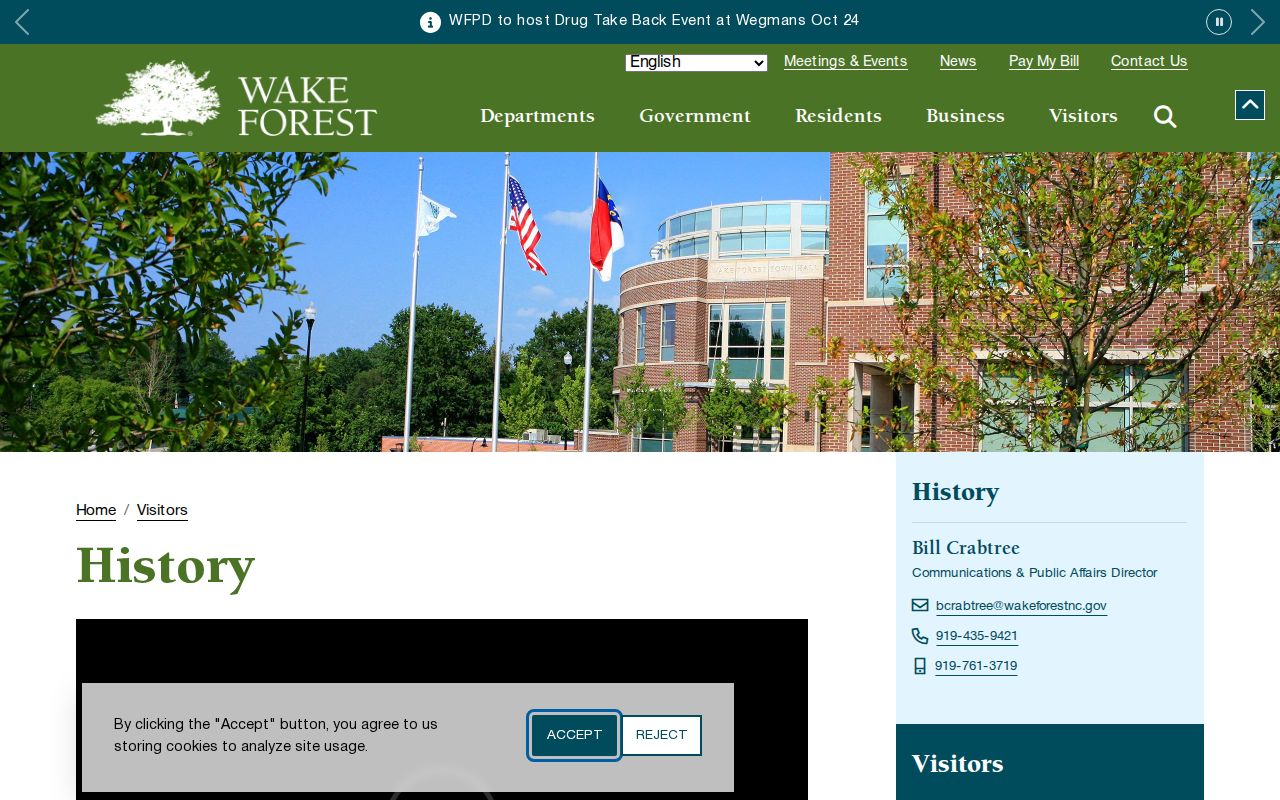
Pair that historical context with the parcel’s legal description before deciding two differently written addresses refer to the same property.
Trace Wake Forest Previous Residents
The Wake Register of Deeds legacy notice identifies recorded documents from July 1785 through April 17, 2025 and notes a new Land Records application launched April 21, 2025. The legacy index remains a useful historical entry point for deeds, plats, easements, deeds of trust, releases, maps, and related recorded material. Its document-type menu even includes GRAVE REMOVAL, HIGHWAY MAPS, and VARIANCE alongside ordinary deeds. A deed record can show grantor, grantee, document type, recording date, book and page, legal description, parcel ID, and a linked image when available.
- Use the parcel card to capture the current owner name, REID or PIN, legal description, and any book/page reference.
- Search the Register of Deeds index for the current owner’s acquisition, using the grantee field, name variants, book/page, or date range.
- Open the recorded deed and write down the seller, who is the grantor, plus its legal-description and parcel checks.
- Search that seller as a grantee to find the earlier purchase, then repeat the handoff from later grantor to earlier grantee.
- Separate deeds from deeds of trust and releases. The latter can explain an encumbrance without transferring ownership.
- When an older link or image is not available, take the book/page and legal description to the counter, request form, library microfilm, or archive.
- Grantor and grantee
- On a deed, the grantor generally conveys the property and the grantee receives it.
- Chain of title
- The dated sequence of recorded conveyances used to follow ownership of the same parcel.
- Legal description
- The lot, plat, metes-and-bounds, or other land description that identifies the property more reliably than a street label alone.
- Reconveyance
- A recorded release or return of an interest that can explain a financing event without being a sale.
A Wake Register of Deeds index page is shown below. It is a finding aid, so read the underlying instrument before treating a name as part of the address history.
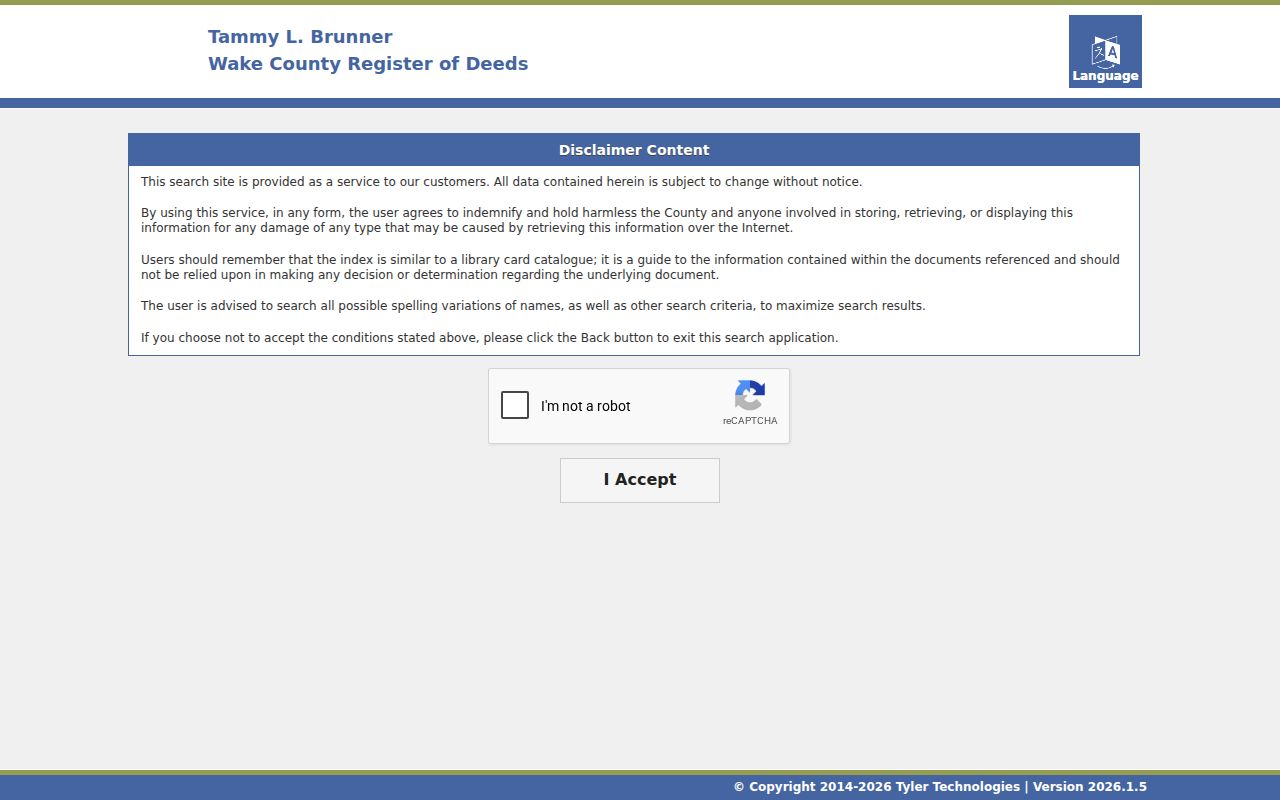
Search both spellings and name orderings where needed, but keep the parcel and legal-description checks beside every candidate conveyance.
Use Wake Forest Previous Deed Records
An online hit is not the end of the document trail. The research identifies cataloged Wake deeds and reconveyances on microfilm or fiche, including detailed reconveyance runs from 1884 through 1939 and deed material through selected nineteenth- and twentieth-century years. Olivia Raney Local History is the documented library route when an older search needs staff help or a cataloged reel. The catalog itself verifies call number, years, publisher or format, and whether material is noncirculating.
Ask for a specific title, year range, book/page, surname, subdivision, or reconveyance run. A focused request helps staff locate an existing source. For a copy that must come from the custodian, use the recorded-document request route or contact the Register of Deeds information desk instead of asking the library to certify a record.
The Wake County Public Libraries genealogy and local-history help page below is the research-help route for library and regional resources.
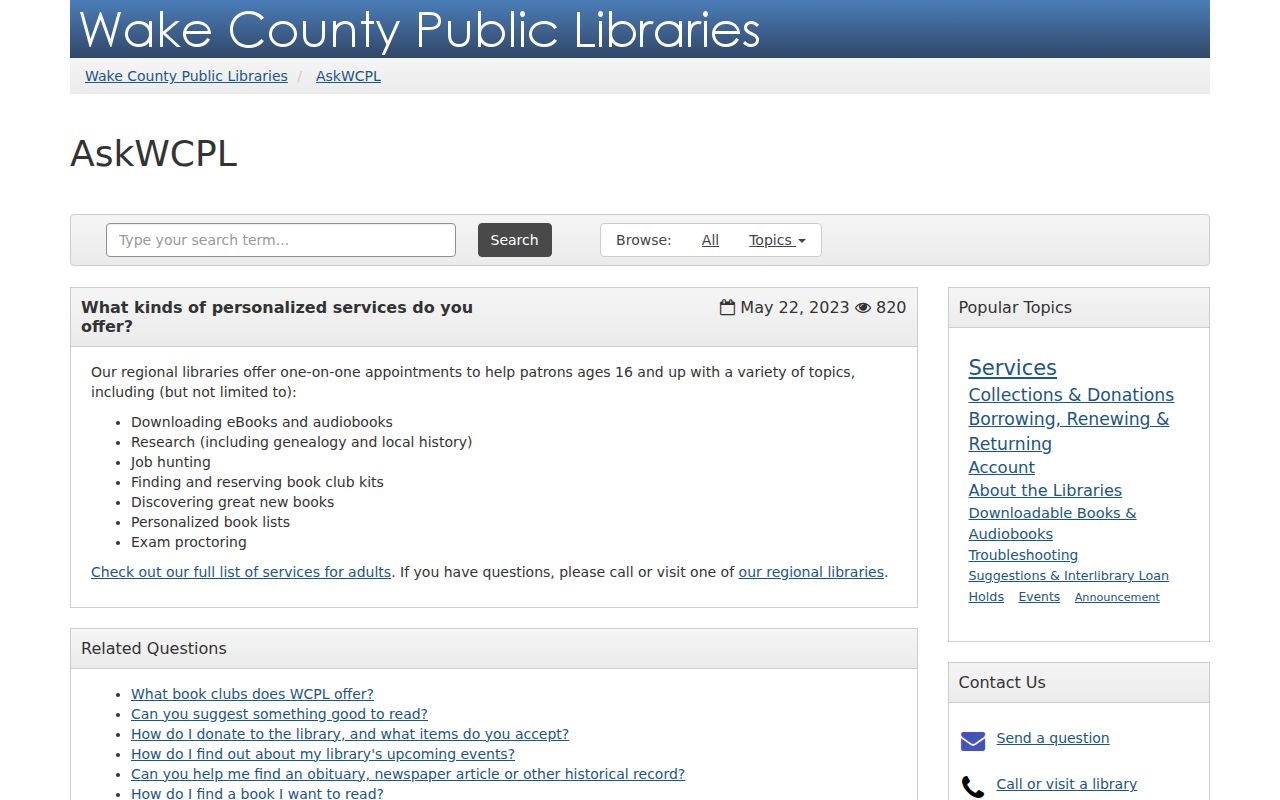
Library staff can help identify the right cataloged volume or microfilm, while the Register of Deeds remains the source for recorded-document copies.
Place Wake Forest Previous Residents
Owners are only one layer of a house history. The Hill Raleigh, North Carolina Suburban Directory, published by Hill Directory Company, begins in 1975 and explicitly includes Wake Forest. Olivia Raney lists recent volumes through a 2026 Vol. 1 catalog snapshot, with some copies marked library-use-only. Search the exact street and compare adjacent annual editions. Record the edition, page, and wording because a printed entry can describe an occupant, telephone listing, business, or household arrangement rather than title ownership.
For earlier regional work, the Raleigh catalog documents selected editions from 1880–81 through 1938 and related Polk, Hill, Maloney, and Wills-Smith cross-reference titles. These titles focus on Raleigh and may include surrounding territory, work, school, or family connections. The 1899–1900 directory uses period shorthand such as r for residence, bds for boards, and rms for rooms; its phrase “bey limits” means beyond city limits. Inspect the scanned page when OCR is unclear. These volumes are a lead, not proof that an address was inside Raleigh or Wake Forest corporate limits. The Wake Forest city directory collection has the full shelf and entry-reading details.
- Choose the directory edition nearest the deed or parcel date and transcribe the address exactly.
- Check the preceding and following edition for a change in the listed name, unit, business, or abbreviation.
- Pair the dated directory clue with the federal census release available for that era, keeping the census place and enumeration context with it.
- Compare the occupant clue against the deed owner, parcel description, and any map or newspaper notice.
- For a college connection, check the selected Wake Forest College yearbooks, then verify with a contemporary directory or newspaper.
Directory and census work should show why a name belongs to that address and time. It should not erase a conflict between a listed occupant and an owner.
Read Wake Forest Previous Addresses
Address fields have different roles. The parcel card distinguishes a physical situs address from a mailing address. A deed’s legal description identifies land. A directory’s residence notation is a publisher’s dated listing. The iMAPS property viewer can search by owner, address, place of interest, or intersection and then open a map and property-information pane. Use it to confirm the parcel footprint and county route, not as a survey or an occupancy roster.
Wake Forest’s Town GIS adds municipal geography, including Town Limits, Jurisdiction, Easements, and Town Owned Property. A dated 2017 jurisdiction map and 2018 corporate-limits/ETJ map are historical snapshots rather than current boundary promises. If a property appears close to the Wake-Franklin boundary, or the map shows a different jurisdiction, return to the physical parcel before assigning a record office.
| Field or source | Safe reading for past residents |
|---|---|
| Situs/service address | Physical property location. |
| Mailing address | Where correspondence was sent, not proof of occupancy. |
| Directory residence | A dated publisher listing that may need page-image checking. |
| Legal description | Land identifier used to test the deed chain. |
| Map jurisdiction | Government geography that helps route records. |
Note: Preserve directional prefixes, street suffixes, units, historic spellings, and the source’s date before comparing two address entries.
Compare Wake Forest Previous Names
Older previous-resident research benefits from a place-name check. The official Town history describes the Royall Cotton Mill, built in 1899–1900, and the nearby worker village. Royall Mills was incorporated in 1907, its charter was repealed in 1945, and the village was annexed into Wake Forest in September 1977 after the mill closed in 1976. The Town’s guide says the mill-village street pattern remains unchanged.
A directory, deed, or newspaper may therefore place someone in Royall Mills, near the mill, or in a town reference that differs from a present mailing label. That is a geographic comparison, not evidence of a different household. Match the historic description to today’s parcel map and the deed’s land description before deciding whether records concern one address.
The North Carolina State Archives finding-aids page below supports the archival path for family papers, estates, land entries, and other records that can bridge a missing local volume.
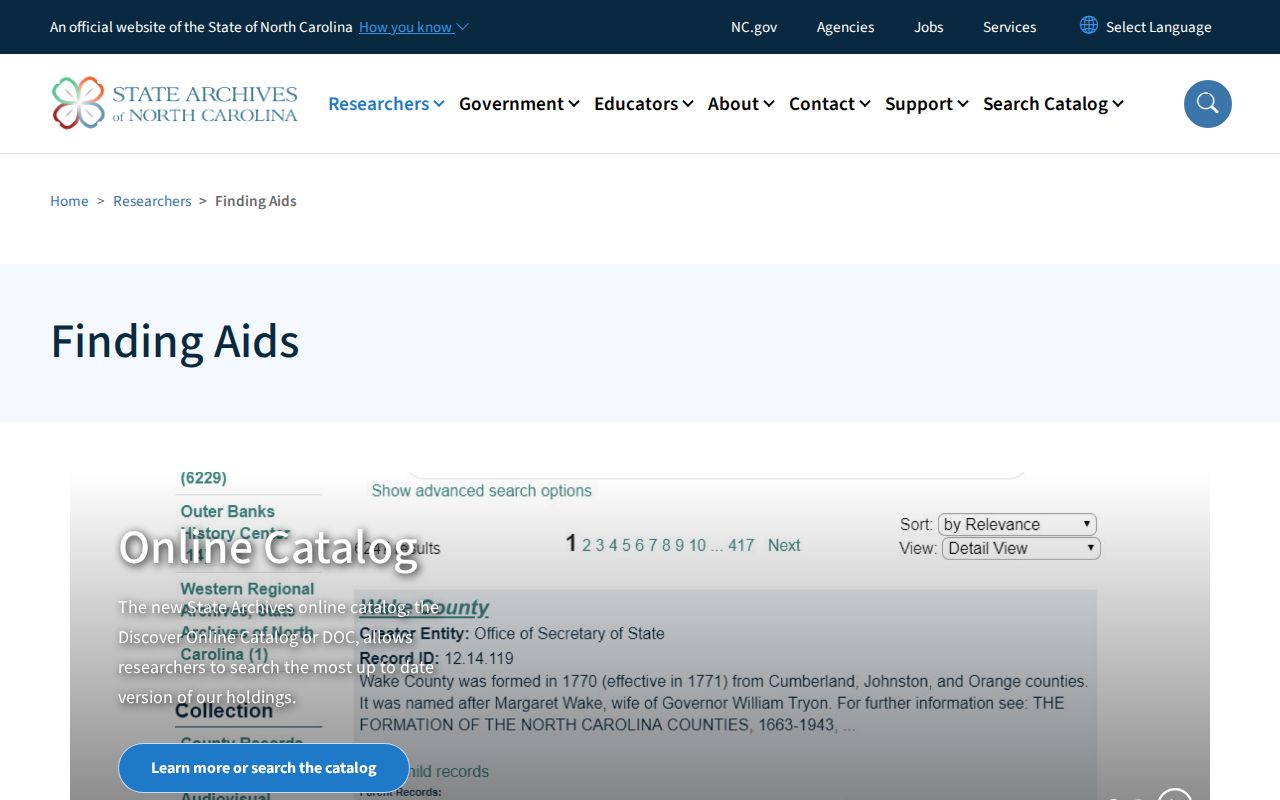
Search the finding aids before a visit, then make any archival request as specific as the name, period, collection, or address history allows.
Track Wake Forest Past Residents
Permits and plats can date a change at an address without identifying who lived there. Wake County’s historical permit search is limited to records before July 1, 2018 and was last refreshed July 13, 2018. It searches applicant name, permit number, owner, address, and PIN. Wake Forest’s eSuite portal covers municipal public information and directs later applications through IDT Plans. Treat a construction or alteration event as a date marker, not a resident claim.
When a directory edition is missing, local newspaper and archive work can supply a narrower lead. The located State Archives newspaper guide lists Wake Forest’s People’s Paper for 1895 and 1896 and Home Journal for 1885. No complete Wake Forest obituary index was located in the official library catalog. Ask library staff, the State Archives, or the historical society about their holdings, then verify an obituary or notice with the relevant official record.
Limit a Wake Forest Previous Residents Search
Not every old address trail will be complete. The research did not locate a separately cataloged Wake Forest-only printed directory run, a complete official obituary index, a single online reverse-directory database, or a verified local courthouse-fire narrative. The sound explanation for a gap is often a source transition: microfilm rather than online images, a limited directory canvass, an event split between custodians, or a newer portal layered over older paper files.
Use the counter, recorded-document request form, library, historical society, and State Archives as documented alternatives. A narrow Chapter 132 request should identify the record class, county department, date range, parcel, book/page, or document number. That allows a custodian to find an existing record without asking for a custom investigation.
Lawful use. Wake Forest previous-resident research belongs to family history, estate work, house history, and personal civic curiosity. North Carolina law prohibits stalking and certain harassing conduct, so never use a historical trail to track, threaten, or harass a living person.